Geometric Rationalization
This project perfectly illustrates how we bridge the gap between an architect’s ambitious freeform vision and a manufacturer’s practical reality. By applying smart geometric rationalization (Design for Manufacture – DFM), we can take a complex facade panel and translate it into a precise, production-ready model without losing the original design intent.
The Challenge
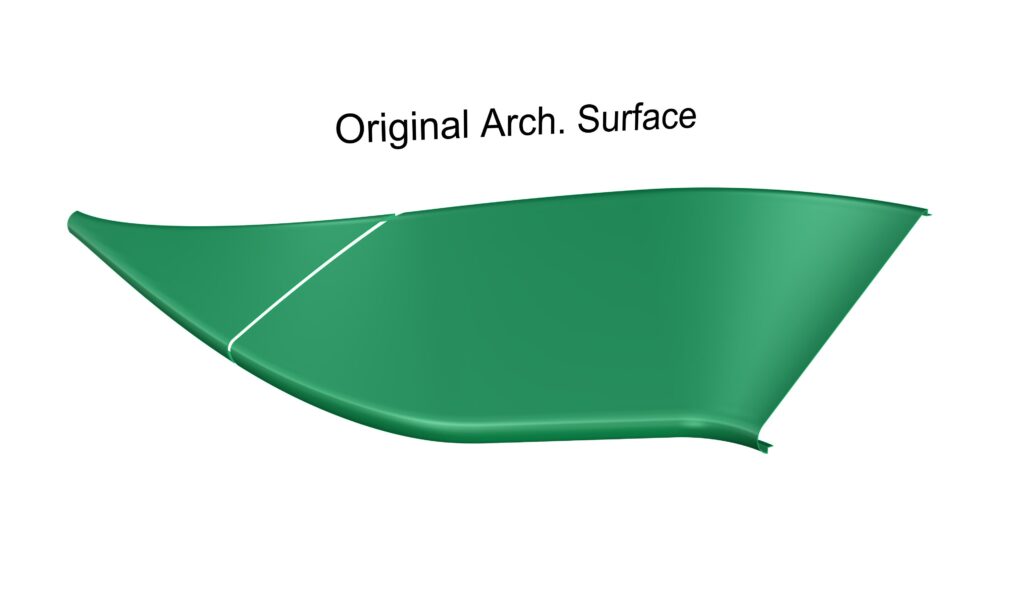
We received a continuous, freeform sheet metal facade panel from the architect. While visually striking, complex double-curved surfaces are notoriously difficult and costly to fabricate. The manufacturer needed us to reconstruct the panel, dividing it into specific, easily manufacturable surface types while maintaining the overall aesthetic.
The Algorithmic Solution
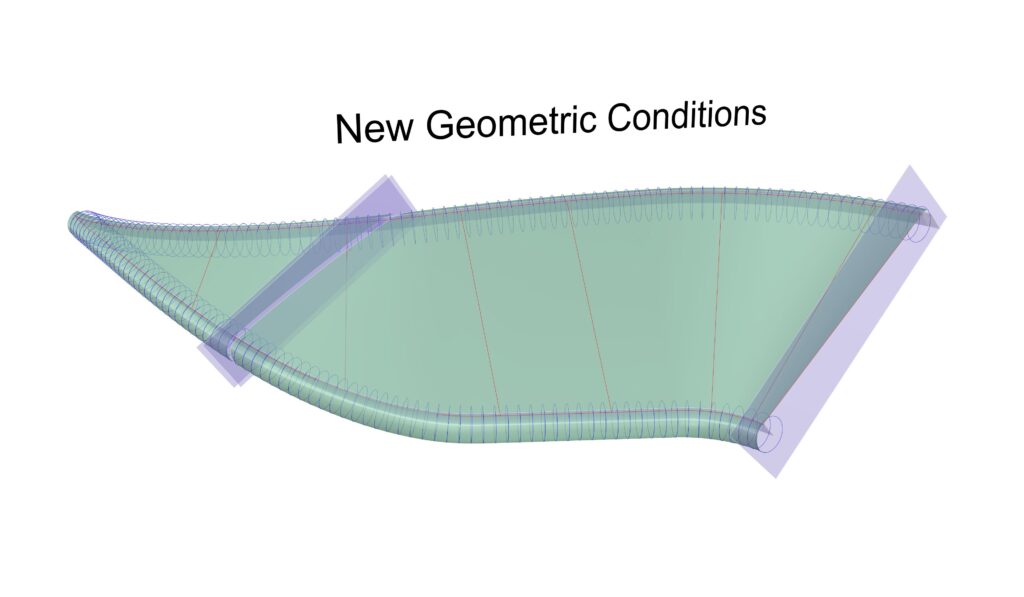
Using algorithmic workflows, we reconstructed the entire panel from scratch to meet strict manufacturing constraints and guarantee perfect production quality (tangent continuity, developability). The new geometry had to satisfy three non-negotiable rules:
-
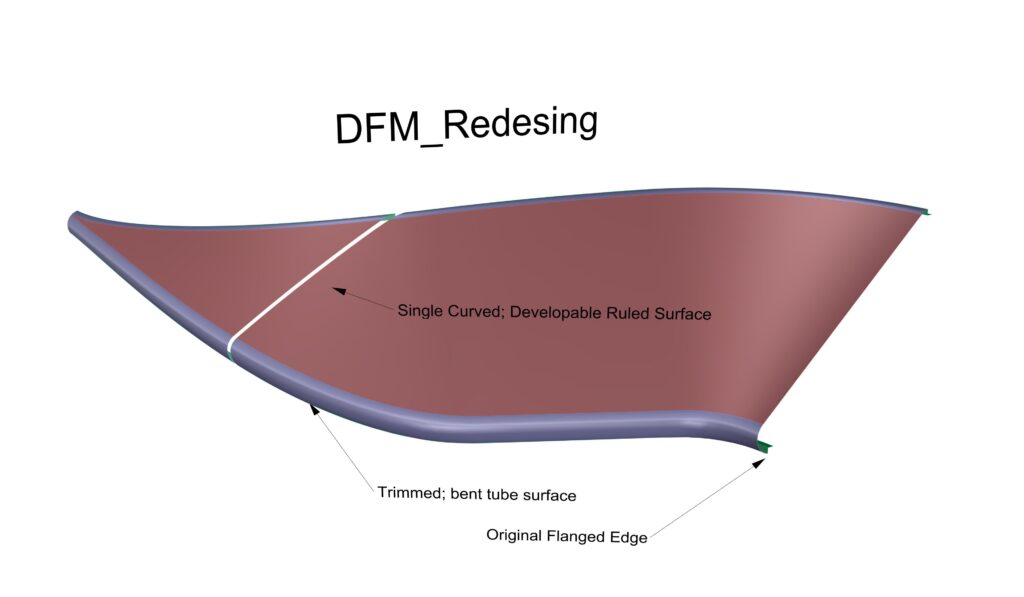
The Main Body (Developable Surface): The central area was strictly redefined as a single-curved, developable ruled surface. This ensures the sheet metal can be rolled or bent using standard, highly cost-effective fabrication methods.
-
The Edge Radii (Bent Tube Geometry): The curves transitioning to the flat areas required strict control. We generated these edges as trimmed, bent tube surfaces with a constant radius, ensuring flawless tangent continuity with the main body.
-
The Flanged Edges (Preserving Connections): The outermost connecting flanges had to remain exactly identical to the original architectural model to guarantee perfect alignment with adjacent structural components on-site.
Deliverables & Verification
The final output provided to the manufacturer wasn’t just a generic 3D shape. We delivered a complete, manufacturing-ready package:
-
A fully rationalized, high-quality overall surface.
-
The model precisely divided into the specific surface types required for the fabrication machines.
-
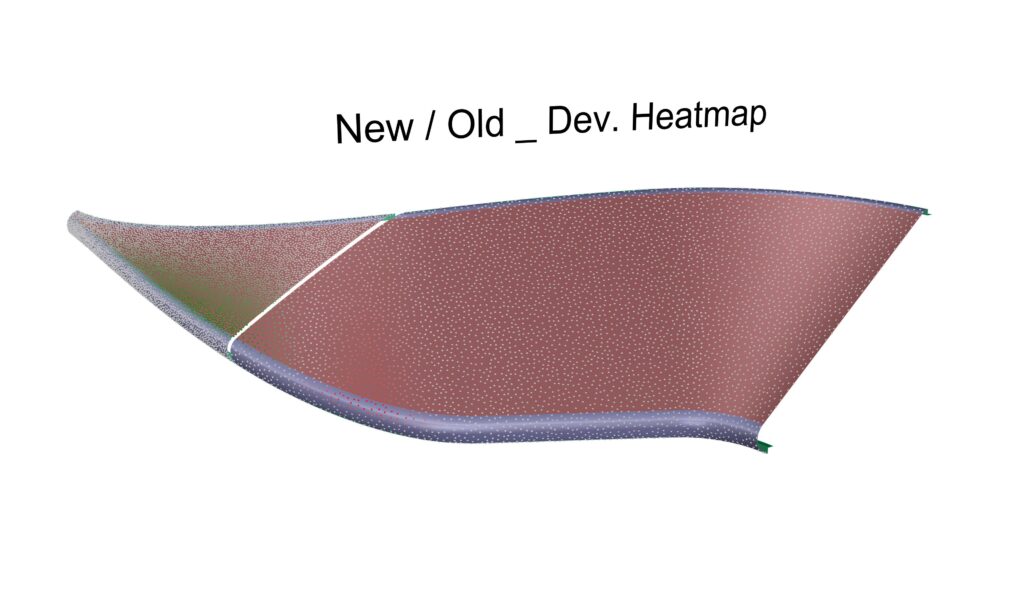
Deviation Heatmap: A comprehensive spatial analysis comparing the original architectural design with our new DFM model. This visual proof confirmed the distances between the two surfaces, guaranteeing that the geometric changes required to make the panel buildable remained virtually unnoticeable.