

Simple Facade
Rhinoceros and Grasshopper don’t have to mean unbuildable complexity or inflated budgets. This project shows how algorithmic design can bring genuine visual variety to an everyday facade — without touching the substructure, complicating production, or adding meaningful cost.
The Brief
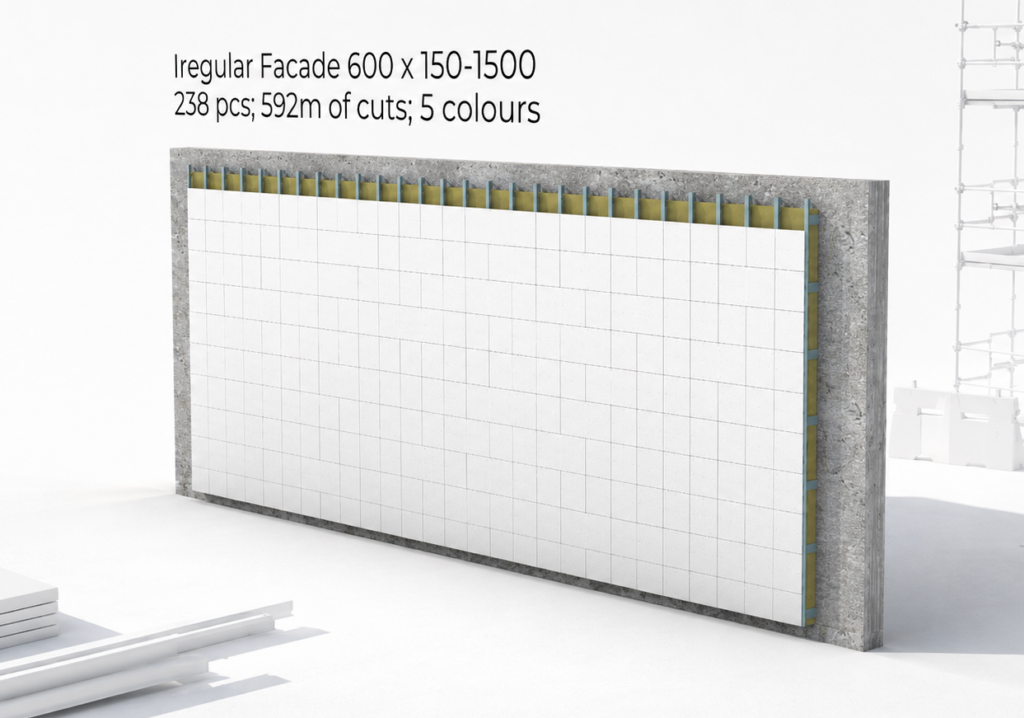
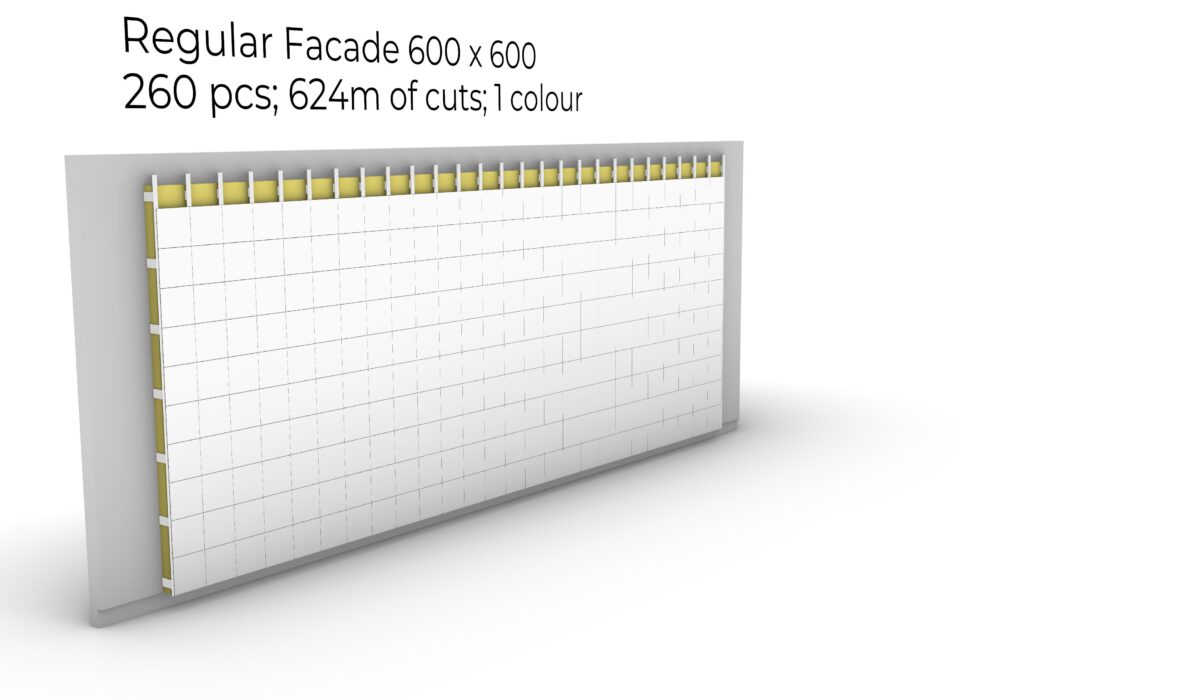
A standard ventilated facade. 600 × 600 mm cladding panels on a conventional substructure — compatible with systems like Hilti, suitable for fibre cement, HPL, Alubond, steel cassettes, or similar sheet materials. The goal: introduce visual irregularity without changing anything that matters to the contractor.
The Logic
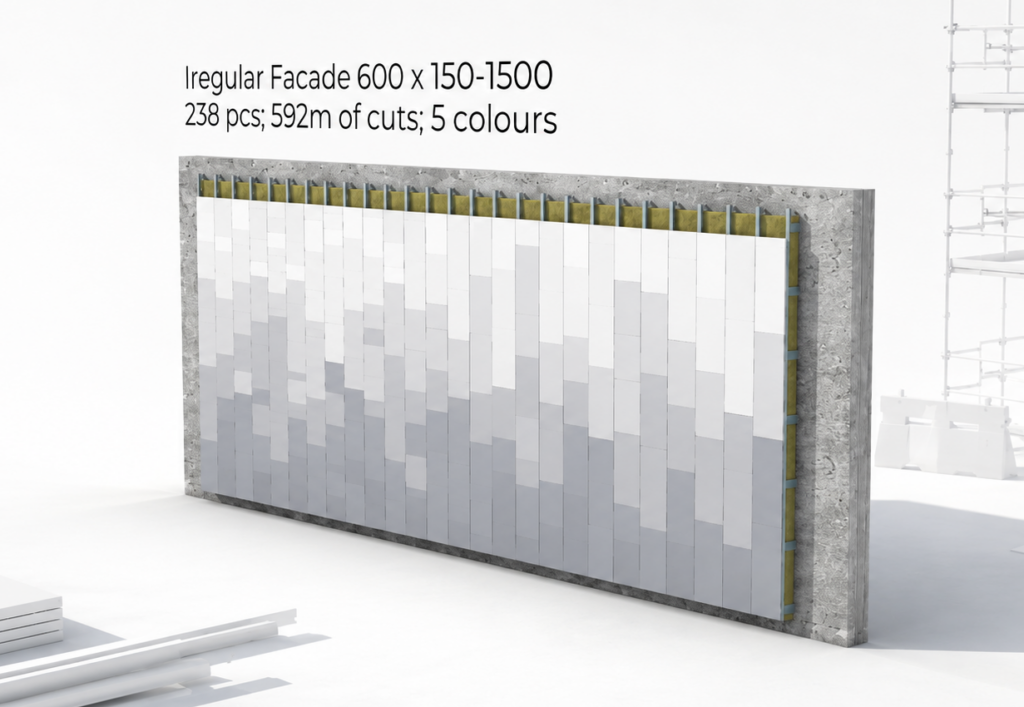
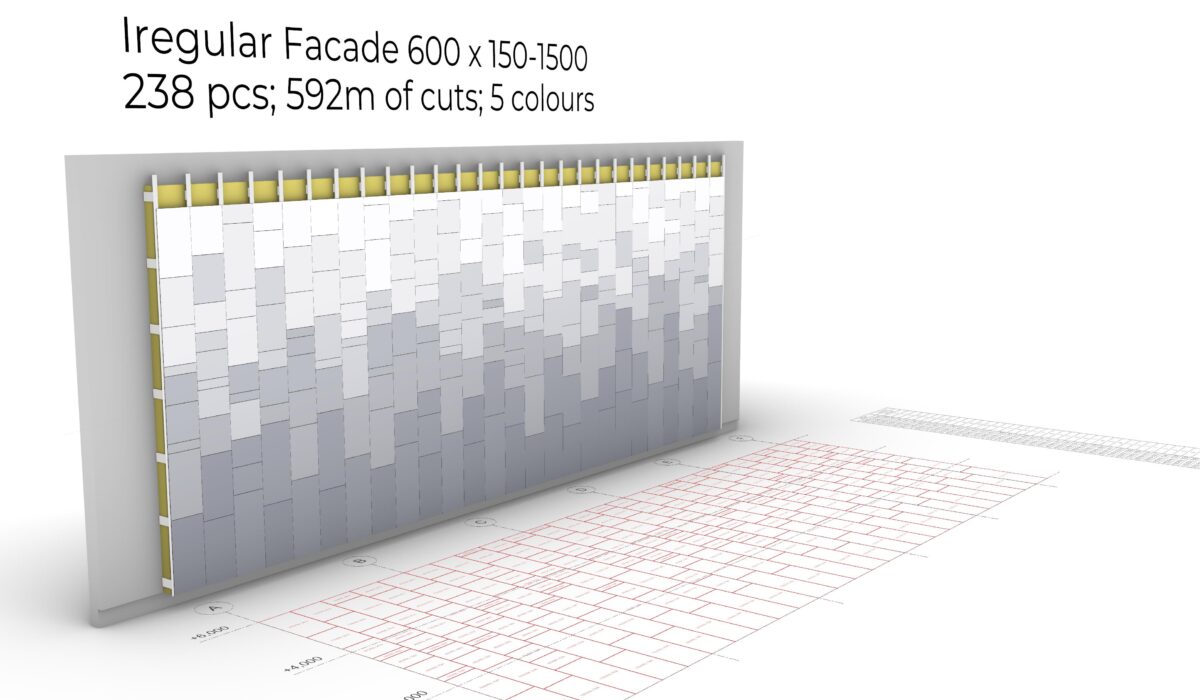
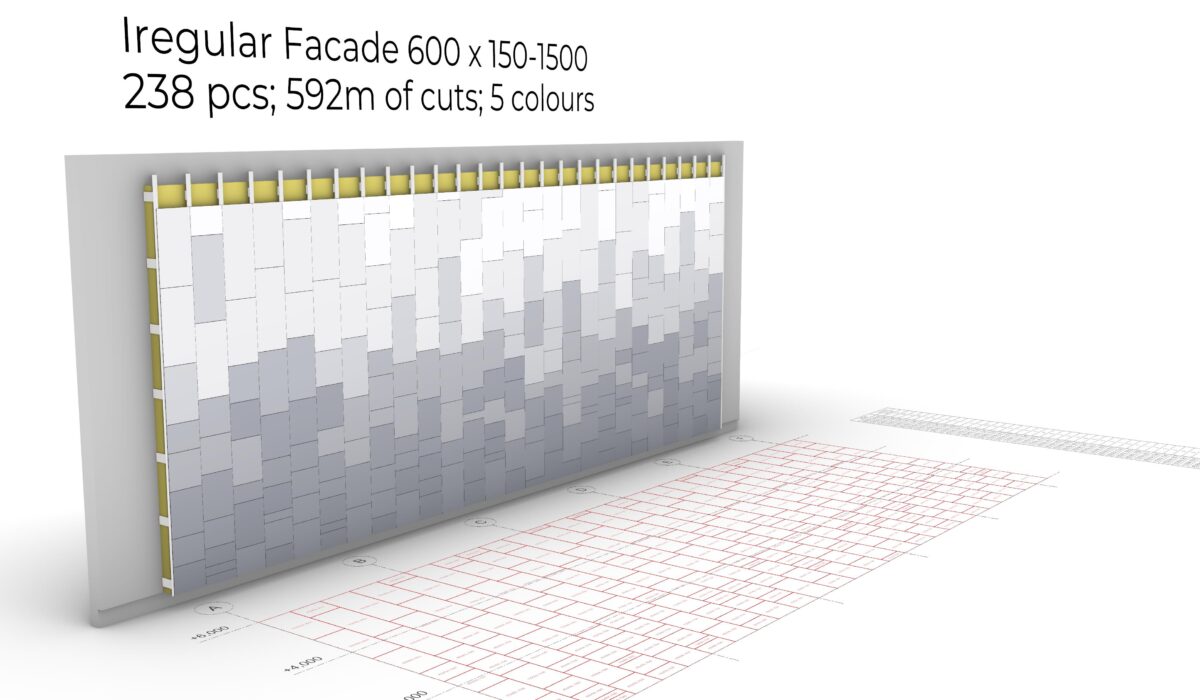
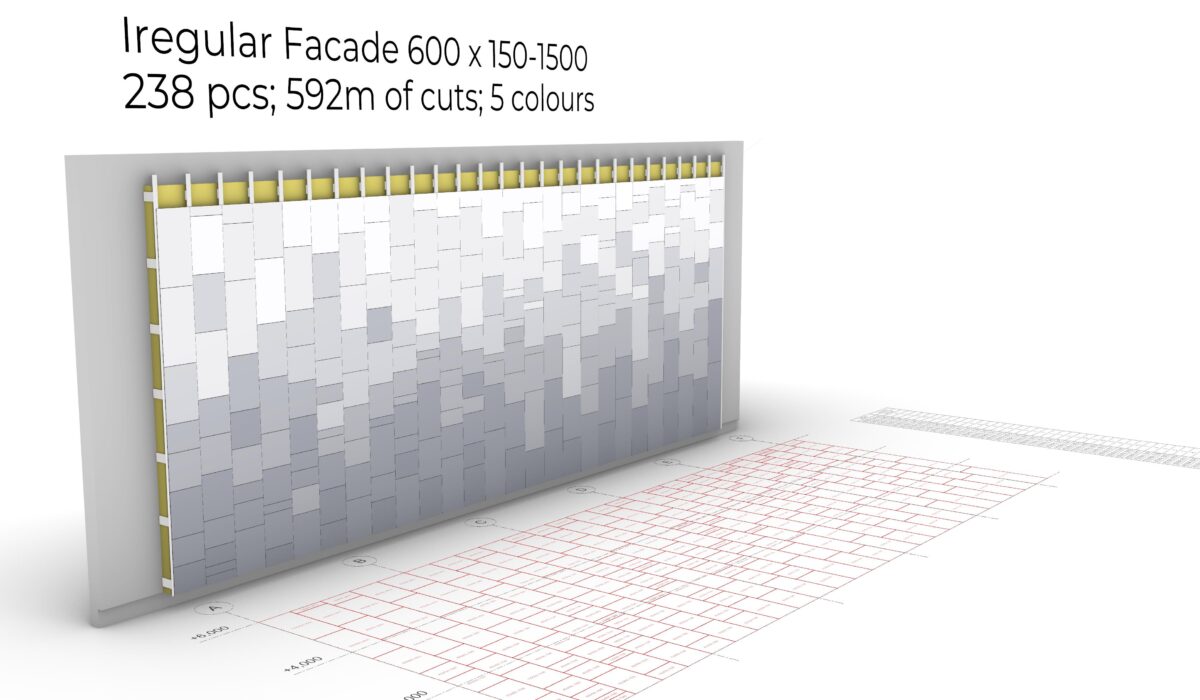
A custom Grasshopper script subdivides each 600 mm column into panels ranging from 150 to 1,500 mm in discrete, exact values. The result is an irregular yet fully controlled rhythm across the facade surface. The substructure stays completely identical to a standard grid layout — no additional brackets, no special fixing details.
The Colour
A gradient across five tones is driven by panel height — the taller the panel, the darker the shade. This makes the variation immediately readable and adds a second layer of visual depth. The same logic works with any material palette or finish.
The Output
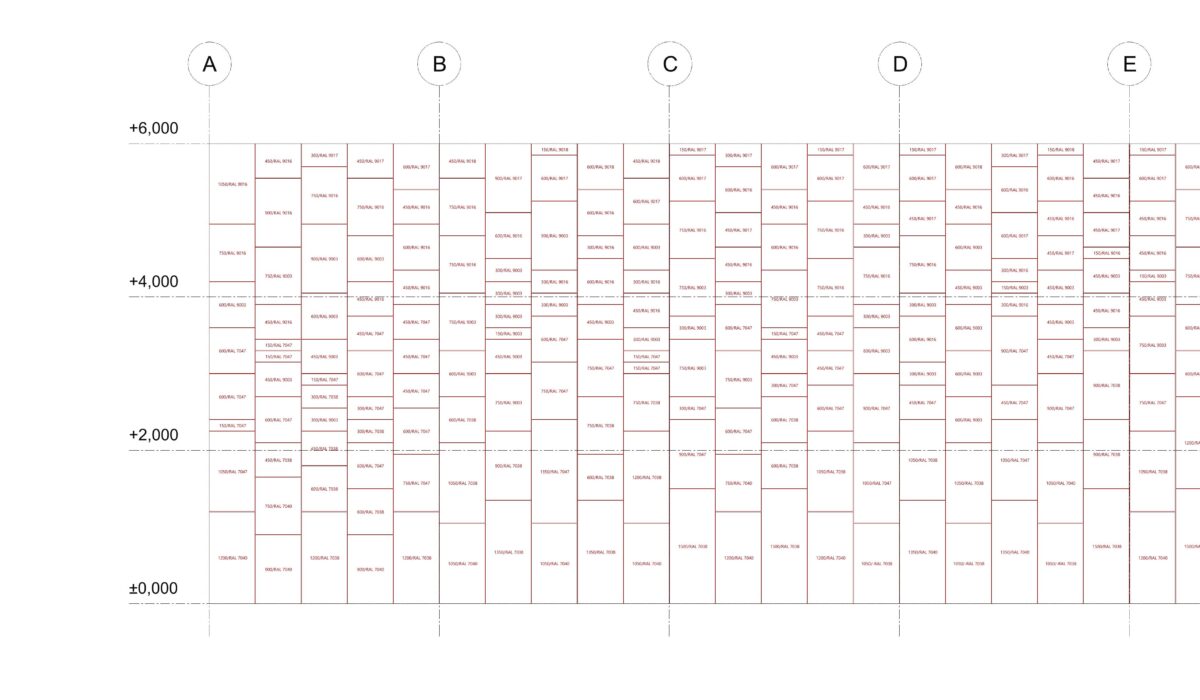
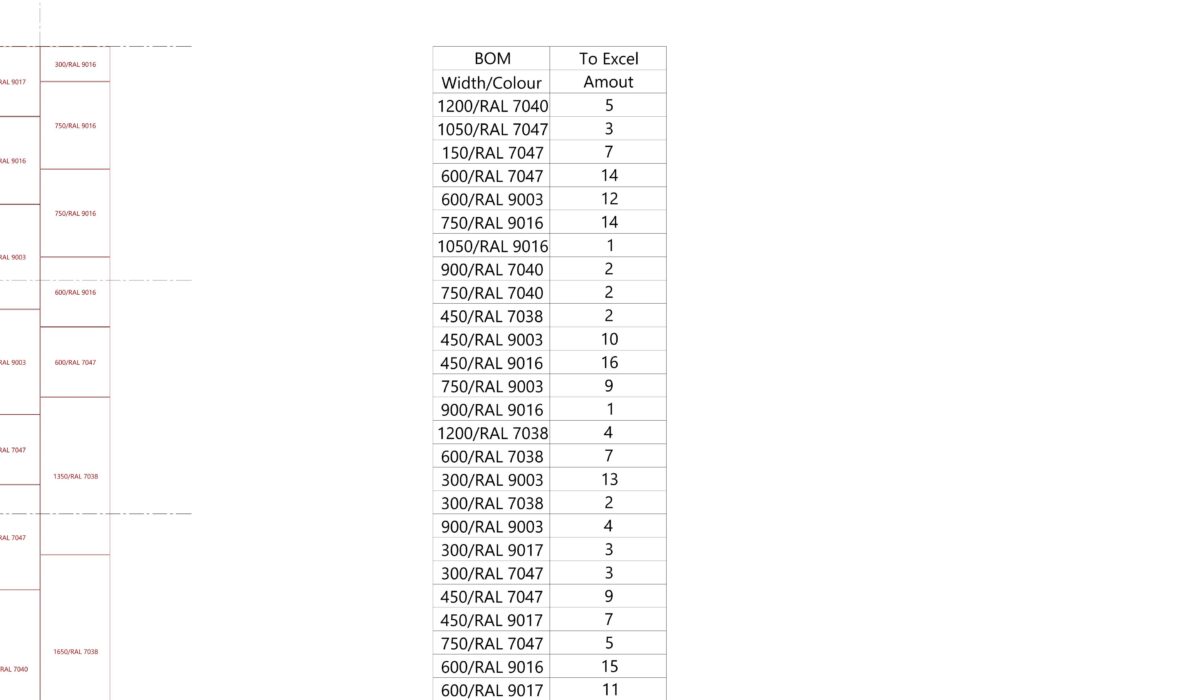
The script doesn’t stop at geometry. It automatically generates a 2D installation layout with building axes, panel dimensions, colours, and location references. The Bill of Materials updates live — counts per size, per colour, per column. Custom schedules can be formatted to match any contractor’s or supplier’s requirements.
The Point
Total panel count and cumulative cut length stay within the range of a standard 600 × 600 grid. From a manufacturing standpoint, there is no justification for a significant price increase.
“Algorithmic design doesn’t have to be expensive. It doesn’t have to be unbuildable. Sometimes it just has to be smart.”